We were so ill prepared to take care of our aging parents, but how did that happen?

We were able to get my wife’s parents in our car and managed to get some clothes for both of them. My father-in-law asked some questions, but he seemed okay with my explanation that we were going to our house. My wife’s mother had a lot of questions about why she needed to go to our house. She kept saying that she wanted to stay in her own house. My wife and I tried to explain that the aide that was coming to her house wouldn’t be able to be there often enough to take care of them. She became very agitated and argumentative. She insisted that she could take care of both of them and didn’t really need any help. Then she started to tell us that the aide didn’t do that much anyway. From my experience as a human resource professional, and later as a middle school guidance counselor, I acknowledged what she was saying without arguing with her. I tried to reassure her that we would bring her back to her house, but we needed to have them at our house for a visit.

Our house is more than a hundred miles away and it is almost a two-hour ride. After about a half an hour, both of my wife’s parents were asleep in the back seat of our car. My wife’s father was 90 and hard of hearing. For years we heard him praying that the Lord would take him home to Heaven. There were things that he had some difficulties with, but he seemed capable of taking care of himself. With that said, he retired after he sold his business and spent a lot of time sitting in his chair reading and watching television. He would take care of his car, take out the recyclables and trash and drive his wife to appointments, but it was his wife who was in charge. Earlier that summer, my son drove with him to a restaurant that we were going to for dinner and couldn’t wait to get out of the care and told me that his grandfather shouldn’t be driving. This was the first thing that we missed.

My wife’s mother was 83, but until a year or two before we stepped in, she seemed capable of taking care of herself and her house, but needed help with cleaning her house and having someone drive her to appointments and to take her shopping. She never got a chance to really retire and continued to oversee her household. She had some transient ischemic attacks (TIA), which are brief strokes that occur when blood to the brain is temporarily blocked. Some of the symptoms included:

  • Sudden weakness or numbness in the face, arms or legs
  • Slurred speech or difficulty understanding others
  • Double vision
  • Dizziness or loss of balance or coordination
  • Confusion

We didn’t know about these TIA episodes until just before we decided to bring my wife’s parents to our house. We learned of these episodes from her friends who were helping her for a long time, but we didn’t learn of them until her friends reached out to us and told us that we needed to take control of their care. We noticed the results of one of these episodes, but didn’t realize how serious things were. We saw the effects of one of these episodes, but then she slept for an extensive amount of time and seemed to return to her normal. We asked her questions about how she was and what help she needed, but the only thing that she would accept was a part-time aide coming in to help with cleaning, some cooking and to take her to appointments and grocery shopping. We thought that this was the normal effect of aging, but honestly, we didn’t know the normal effects of aging and I am not sure that my mother-in law was aware of just how bad things were.

As I Look back on how we missed just how bad things were, we visited, helped them get things done around the house while we were there and hired an aide, but we never probed or fully investigated what was going on with them on day-by-day basis. My wife is an only child, and we have lived about two hours away for our entire married life. Her parents always told us that they were fine and didn’t need anything. My strongest suggestion is to make a thorough assessment of what is going on in your parents’ life rather than just accepting what you are being told. Honestly, don’t most of us want to believe that we can take care of ourselves, and we don’t want to admit that we can’t take care of ourselves? And for those of us that are getting older, shouldn’t we reach out to our children and encourage them to pay attention to what is happening in our lives so they can give us an honest appraisal of what they see?

Caring For Your Elderly Parents

My wife’s mother was a great example of doing everything right through the decisions that she made, but dementia led her to become disabled. She had a positive outlook on life. She didn’t drink alcohol or smoke, and she made sure that she had an active lifestyle and ate healthy well-balanced meals. She also scheduled regular appointments with her doctor and had yearly physicals. All those things were true until she wasn’t able to remember to make those doctor’s appointments. My wife and I missed the signs until we saw a notice from the insurance company that her homeowner’s policy had been cancelled. Her friends started to reach out to us that they were concerned about her ability to take care of herself. Her husband was 87, had hearing difficulties and was used to his wife handling all the cooking and household responsibilities including finances. I don’t know why we missed the signs, but these wakeup calls suddenly became very clear and it was urgent that we needed to step in to help.

My wife’s parents never reached out to us and my parents and grandparents didn’t require a high level of care as they aged so this was all new to us. I guess that my wife and I assumed that things would be fine with her parents as they aged, and we would see any problems before they became serious. In retrospect, her parents didn’t think they needed more assistance and maybe they didn’t want to be a bother to us. I know that my wife and I don’t want to be a burden to our children. However, we wouldn’t have looked at this as a bother and would have wanted to help her parents.  Now we were questioning how we could have been so unaware about what was happening to her parents. We looked at this situation as a failing on our part.

We had hired a personal health aide to be at their house to help with cooking, cleaning and to drive them to appointments. Her mother told us that it wasn’t necessary, and she could still take care of her house. She told us that her husband still could drive them to go shopping and to appointments. Thank heaven for my mother-in-law’s friends that called us and told us how frightened they were. They told us a totally different story. They were concerned about their safety in the house when the health aide wasn’t in the house and how dangerous they thought my father-in-law was when he drove his car. We went to their house and stayed there to see how bad things really were. Within just a couple of days with the home health aide still coming to the house, we realized that they couldn’t live there without full-time assistance.

It was fortunate that this happened during the summer. We were both on a teacher’s schedule and off for the summer. We were able to take immediate action and told them that they were coming to our house which is over a hundred miles away. They didn’t want to leave their house and told us they were fine, and we were making too much about a situation that wasn’t really a problem. We convinced them that we just wanted them to come to our house for a visit and they agreed to that. My father-in-law insisted on driving his car, but the car wouldn’t start. He had owned an automotive repair business, and he couldn’t figure out what was wrong. I knew right away that it had a dead battery so I told him that we would fix it when we brought them back to their house.

Next time I want to talk about how bad things were and how ill-prepared we were.

Can you really make yourself more able?

I became obsessed with playing music and wanted to play as much as I could and work on my “bucket list”. Things were going in that direction, but in life, my journey has never been a straight line or included just one thing. I also have a bad habit of trying to “fit ten pounds of potatoes in a sack designed for five pounds”. When my sons were playing sports, I balanced watching them, coaching them and playing sports myself. My career was important to me, so I made sure that I put in the time and effort to develop the knowledge and skills necessary to be successful, but I also was careful to choose jobs that would give me the flexibility to make my family and my personal goals a priority. To make this balancing act possible, and when time is limited, something must be eliminated or changed. You need to learn to “able” yourself.

To able myself to get a lot done became obvious, I needed to reduce the amount of sleep that I needed in my schedule. I remember taking seventeen credit hours of course work in college and working thirty-five hours a week. In college I existed on limited sleep and I eliminated a lot of social opportunities. I didn’t have a lot of money so eliminating things that cost money became a challenge to find free things to do in small windows of time in my schedule. There are a lot of things that are fun that don’t cost a lot of money, but finding time in a busy schedule tends to eliminate a lot of opportunities. For me, I was able to find jobs parking cars at three of the top country clubs in the Washington DC area. Most of my time was spent parking cars during events that were on weekends and lasted until the last car was brought up to the customer at the end of the night. My other job was on campus in my dorm, and I could set my own hours as the dorm’s custodian.

Those times in college set the tone for most of my working life. I learned to adjust to less sleep and looked at fitting more things in my schedule as a challenge rather than a burden. After I bought my second house, I learned that I could spend time with my boys, play sports and keep up with responsibilities as a homeowner and the owner of a rental house by cutting the amount of sleep that I had in my schedule and by finding small windows of opportunity in my schedule to get things done. I learned to cut my lawn even though it was already dark outside. I learned that working in bad weather was a challenge, but doable. I also learned how to work on houses by myself. I learned that it was important to do things with family even when I wanted to take a break from work and just sleep. This wasn’t as hard as it seemed because I watched my parents do this for most of their working lives.

It is interesting how our minds work. We think about what we are doing and make an assessment. Often, we commend ourselves for doing such a great job. Sometimes it is years later that we realize that our children and our partners had a different view of what we did and how it seemed from their point of view. I realize now that I was selfish with the amount of time that I spent playing sports and hanging out with my buddies. I also realize that I can’t change what I did, but I can change what I do going forward.

 In 2000, I made a change in my life that changed everything. Our sons had graduated from high school, and they were on their life’s journey. Without discussing my decision with my wife, I asked the head of our division to eliminate my job in the company’s reorganization rather than eliminating a job of someone that reported to me. I was sure that I would be given a generous package as an officer of the corporation and believed that I could go back to being a Guidance Counselor in one of the local school districts. I wanted more time to spend with my wife who was a first-grade teacher, and I wanted to be off work during the summers and every major holiday.

This worked out very well for four years until we received a call from one of the people that we hired to assist my wife’s parents with cooking, cleaning and driving them to appointments while we were on a three-week vacation. We didn’t realize things could deteriorate so quickly. Later, after my wife and I observed how needy they were as we took over their primary care, we felt horrible that we didn’t pay closer attention to just how much assistance they needed. We lived more than a hundred miles away and visited, and people were coming to their house on a regular basis, but we didn’t see how much help they really needed. When we were there my wife cooked and cleaned, and I took care of projects around the house and outside. We insisted that we should take care of things that needed to be done, but we should have paid more attention to what they were doing and how they were doing those things. What we have learned will hopefully help our children look at what we do and how we do things as we continue to age. We are trying to able ourselves by talking to our children about what we learned and have conversations about concerns that we have as they come up. We learned that it is not a good idea to tell your children that everything is fine, when you know that something is wrong.

Most people make plans for what they are going to do when they are more financially able and have the time to plan new activities, vacations and excursions. Life has a way of redirecting us. Life has a way of presenting us with challenges that we didn’t see coming. The question is how you handle these unplanned challenges to your life. In our case, my wife is an only child, and we were thrust into this new challenge and immediately had to figure out what we were going to do. It was June of 2004, and we were off for the summer. My decision to go back to education and a school year schedule was now making our life easier as we were now caring for parents in their 80’s.

My wife’s father died in 2005, and her mother’s medical and cognitive issues continued to deteriorate, and she eventually needed to be placed in a nursing home. We learned during this experience that you really need to do your homework in selecting a nursing home and you need to have sufficient resources to afford a nursing home that you would be comfortable living in. This has been an on-going conversation between my wife and me and our financial advisor. I would strongly advise that this decision and the research necessary to make an informed decision is not ignored.

By the middle of 2008, my wife and I had started to have opportunities to resume a more normal and enjoyable life. Her mother was close to our house, and it was easy to stop in and make sure that things were going well. We were able to spend time at the beach and to resume our trips to our oldest son’s house in North Carolina and even some trips to Florida. Things were going great and then we received some devastating news. My wife had breast cancer. Shortly after that, her mother passed. For some reason, maybe because of our faith and our faith in advancements in medicine, we felt like this was going to be okay. I remember thinking about something that I often said when I was working with students and their parents: “When you can’t change the circumstances, control how you deal with those circumstances.”

My wife is a cancer survivor, and she retired from teaching in 2009. I continue to marvel at the wonderful medical professionals that helped us get through her treatments. I think about the wonderful hairdresser that worked with women that were being treated for cancer and how he knew exactly when to shave her head before her hair fell out while he had her looking away from the mirror. Then he put on her new wig and started to adjust how it looked as he turned her toward the mirror. He then started to talk to her about their next appointment. I knew at that moment the difference between disabled and abled.

I finished my working career in 2019, and I often think about all the students and student athletes that I worked with. I remember the students that had IEP’s and 504 plans and marvel at the great teachers that were in our school and how hard they worked to ensure that those students were able to succeed and advance. These successes don’t come by accident or by casual conversations. Somehow, we must take responsibility for our family members and ourselves and make plans to become able rather than slowly becoming disabled. It needs to be a conscious activity and requires honesty when we are talking to the people that may be expected to take on this responsibility. I don’t want to thrust this on my children, but I also realize that my wife and I were caught completely off guard because no one in our family talked about this possibility.

Now I am seventy-six, retired and looking to add music, travel, learning to speak Spanish, having a vegetable garden and the list goes on. However, I have made sleep a priority because it is a healthy thing to do and have built in a lot of social opportunities into my schedule.  My wife and I have been great in supporting each other in the things that we both are doing, but my perspective has changed. It has been exciting working on my bucket list and our bucket list, but she is having some mobility issues, and we need to figure out how to do things differently. The vacations we were planning need to be adjusted to accommodate her mobility needs, and we haven’t figured out what exactly needs to be done, but our goal is to start creating a plan to allow us to be able to continue with our travel plans. We have decided that we will focus on how to get this done rather than the problems that will surely present themselves. I will keep you informed, but please send us your thoughts.
Focus on Living Your Life: Playing Music Again

I had taken a break from this blog because it wasn’t supposed to be my blog. It was supposed to be the blog for the Advisory Board of the Salem County Office for the Disabled. I resigned from all volunteer boards in Salem County, New Jersey because I want to spend as much time as I can with my family, travelling and doing things that I find interesting. After living three quarters of a century developing several careers and spending decades as a volunteer with disability community organizations and as a coach with youth sports, this last act of my life has given me the opportunity to pursue things that I wanted to do as a young man, but discontinued to get married, raise a family and learn to become an adult and take on adult responsibilities.

I wouldn’t change the course of my life too much because I really love how well my life has turned out and there are so many great memories during this journey. Are there things that could have been done differently and better? Of course, but the last act of my life is not about regrets. I could have retired from my last career as a middle school guidance counselor sooner, but I really loved that career, and by working until I was 70, I received 132% of the maximum Social Security benefit and the cost-of-living adjustments that are part of the benefit. I have always been focused on my finances.

Work has always been a part of my life. A strong work ethic has been a characteristic of almost every man in my family going back generations. When I talk to the other men in my family, we all seem to agree that we were put here to work and take care of our families. We love our families and want our children to do better than we did. Hasn’t that been the American dream? Yes, it has been, but what about the last act of our lives? The part that includes retirement and getting to now get to do things that are just for fun or because I wished that I had a chance to do that when I was younger.

One of the things that I didn’t get a chance to pursue to the degree that I wanted was to play music. I wanted to be in the band in high school and play the drums, but my parents wouldn’t agree to that. Maybe it was because they had four kids in a three-bedroom ranch style house and there really wasn’t any room. I bought a set of drums during college and started playing with a longtime friend that was a music major and very talented. I got a chance to play with him and some of his friends that were music majors, and I loved it. I even got to play with them in New York. Then, I met a girl that I loved more than I loved playing in a band. I still loved playing my drums, but it wasn’t long before they were in their cases and packed away in the attic.

Before I actually retired, I unpacked my drums and set them up in a part of our house that we used for storage. I played them, but playing drums by yourself is not how drums are meant to be played. During a short vacation in Southern Shores, North Carolina with my friend Mark I noticed his guitar and I said I would love to get back into playing music again. Mark has been singing with different musicians in the outer banks for a while and was quite direct. He said, “Frank, if you really want to do it, you will. If you don’t really want to do it, you will just keep talking about it and it will never happen.” I think it was at that exact moment that my last act started to become much clearer.

I was retired, had a set of great drums and just needed to find a way to start playing with other musicians. That shouldn’t be impossible. I spend a lot of time in the Asbury Park area at the shore in New Jersey and there are lots of musicians and places to play music. One of the statements that you here about Asbury Park is that it is where the music lives. I started to make some contacts and then I heard about Lakehouse Music. They have programs for anyone that wants to learn to play music and give you an option to put you in a band with a music coach and pair this with lessons. One of their goals is to get the band picking music and learning to play six songs for a gig that will include about 40 plus of their bands over two days. They put the bands in a very real setting and then it is up to the bands to put in the work. Having people in the audience and the ability to listen to the other bands has a tendency to allow the band to evaluate how well they have done.

My goal is to continue to improve and try to play with as many different musicians as possible. I am 76 years old, and I am not looking to do gigs in bars or try to get a following. The journey I am on is not about fulfilling dreams that I had when I was 18 to 20 years old, it is to enjoy playing music because I love to do that. I have been on this journey for 8 months and this band has gone through a number of changes in the members of the band. But like most things in life, change is always a part of the process, and our bass player has left the band to go in another direction. He has found some other musicians that want to play a lot more and they need a bass player and a drummer. He wants me to go with him. For me, I want to stay with the current band and start playing with a new group of musicians. This last act is really starting to get interesting.

Oh, by the way, I am also learning to speak Spanish, and I am researching family members on ancestry starting right before the Civil War and what brought them to Ocean Grove, New Jersy in 1875. It includes Civil War soldier letters between brothers and family members and how they were able to keep this property in their family and their ties to the Ocean Grove Camp Meeting Association. As I said, this is a very interesting last act of my life.

Abilities: Not a Disability Journey

When I started this blog, it was supposed to be a forum for all of the members of the Salem County Office for the Disabled Advisory Board. It wasn’t intended to be my blog. We were frustrated that there was so little money available for residents that were “disabled” that it was rolled into the Office of Aging because there was money available for senior services. It made sense in a practical and financial sense.

It didn’t make sense when programming was concerned. Imagine that you are a college aged person that is in a wheelchair, and you are included in on the events that are designed for our senior citizens. Maybe your choice of music and movies are Hip Hop and the Fast and Furious, and the music selected is Frank Sinatra and the movie is the Sound of Music? The blog was designed for discussion and suggestions. Unfortunately, it didn’t go in that direction and our advisory board is no longer in existence.

Our plan was to use the blog to get involvement and discussion on ideas and strategies that could be utilized to add value to a journey toward independence. We were hoping for stories and ideas that could be shared and an on-line discussion that would create opportunities. As an example, I do get a lot of emails and comments on a blog that I wrote on how to get a ramp built. This works really well in Salem County, New Jersey because of a group of very committed retired union electricians that install the ramps and the support of our local Habitat for Humanity. However, that isn’t available in most communities.

At this point, I really don’t want to get involved with social media even though I know it is a more powerful strategy. That may be the next step.

I do want to encourage anyone that wants to contribute ideas and stories that can be part of this blog by contacting me at fhentz@hotmail.com. I hope this can be a vehicle to hear the voices and journeys of anyone that is able, not disabled and how they navigate their journey.

Living With A Disability, But Not Disabled

I attended the funeral of a former aide in our special education classes two weeks ago. John was just in his 40’s and not much older than my sons. He was paralyzed as a result of an accident in high school and continued to deal with the medical issues related to the accident.

John used a wheelchair to get around the school but drove a car and a Harley trike to travel. And travel he did. In most ways he was doing the same things that my sons were doing. He, like my youngest son Jason, had season tickets for the Philadelphia Eagles and they enjoyed the games and the time they spent at the games tail gating with their friends. John and Jason knew a lot about sports, and both were very good athletes in high school. They were both fun to be around and people were drawn to them. The girls loved them.

They both loved to travel and were always planning their next adventures. They both had dreams and worked hard to make their dreams become a reality. Unfortunately, although John completed his course work and was certified as a teacher, his medical issues kept him from becoming a full-time teacher. His medical conditions were the only barrier he couldn’t overcome. John would have been a very good teacher.

There were so many people that attended John’s viewing and there was a long wait to get up to see him and his family. The mood was sad and festive. So many people talking about John and things that they did with him. So many pictures of parties, family gatherings, Eagle’s games and vacations. So many items around the room that gave everyone a glimpse of what John did to enjoy life. John lived a full life and didn’t dwell on the barriers he dealt with and overcame. A lot of people will miss John.

Today I went shopping and was reminded of something that John would have been very vocal about. Something that I am very vocal about: cars parked in and too close to clearly marked handicapped parking spots. I pulled in just as a van was trying to park in one of those parking spaces. The driver had no choice but to park within inches of a car that was in the parking space that she needed, and she had to exit the van on the passenger’s side. Her daughter was in a wheelchair and there was barely enough room to get her out of the van.

I am sure that the driver that was partially parked in the spot she needed for her van would come out and be very upset that someone parked so close to the driver’s side of their car. They would probably start uttering negative comments about how rude the van driver was to make them have to use the passenger’s door to get into their car. Maybe they were an aggressive person and maybe they might feel justified in doing something to the van to show their displeasure.

As it worked out, I exited the store right behind the woman and her daughter as they were getting back into the van. The mother watched me push my cart to the passenger side of the car next to her van until I got to the next row and loaded up my car. I am pretty sure that she would have been very vocal about the situation if I was the driver of the car that made her life so difficult. The driver of the car probably came out later and drove away with no idea of the difficulty that was caused.

If I can have one wish, it would be that someone reads this and becomes more aware of why there are handicapped parking spots and why they should respect the reason and need for those spots. John, you are gone, but I will continue to try and educate people on the barriers that made your life more difficult. I will also remember how you would find a way to overcome every barrier that was put in your way. John, you are missed, but not forgotten.

Next Steps: Focus on Living Your Life

The Salem County Office for the Disabled is no longer a part of my life as a volunteer, but I wish them well in all of their endeavors. I still get their robocalls about events, but the events seem to be almost exclusively focused on a senior population. I get that because that is where they get their funding for staffing and programs.

I have kept up with a number of former volunteers and it seems as though many of us are now in volunteer retirement. I think that all of us miss the actual work of adding value to programs for the disabled community, and I know that there will be those out there that will take issue with the use of the word disabled, and I agree that I should keep up with the newest designations, but my message has always focused on not being disabled. A state of mind decision.

My friend Ray had a motorcycle accident when he was nineteen and my friend John was thrown out of the bed of a pickup truck when he was in high school. Ray and John do so much more than so many people that aren’t in a wheelchair. They focus on living their lives and enjoying their travels: Ray in his pickup truck and vintage cars and John on his Harley trike. Ray on his tuna trips in the ocean and John at the Eagles games and so much more. They have both decided to overcome the pain and barriers that confront them and find ways to live their lives.

Well, that brings me to next steps. I am not exactly sure where this goes, but I am now 75 and things that used to be easy and pain free are now a more painful part of my life. It is also a part of my wife’s life and the lives of our numerous friends that are also over 70. I guess it could be called adventures in aging and how to keep things positive.

Here is an example of what happened last week. I went bowling with two friends that attended the same elementary school and who graduated with me from high school in 1966. Years of cumulative trauma from heavy construction projects, years of coaching baseball and pitching batting practice and decades of playing in basketball and softball leagues has taken their toll on my right shoulder. After about 6 frames of bowling, I realized the pain of bowling was more than I could handle. As the ball went back, stopped on the back swing and started forward toward the bowling lane I couldn’t hold the weight of the ball and it dropped out of my hand.

My friends, Jim and Frank showed their concern and suggested that we just stop. I thought about Ray and John and knew that this would have not stopped them. When my turn came up again, I took the ball and put the fingers of my left hand into my bowling ball. I walked slowly toward the bowling lane and awkwardly released the ball toward the bowling pins. The ball ended up in the gutter. The second attempt was closer to the pins, but still in the gutter. I finished that game and the results were not very good, but I started to hit some pins. Jim and Frank were concerned that I was going to be very disappointed and suggested that we go and have some lunch.

I told them that I wasn’t experiencing any pain and wasn’t concerned about my score or the looks of other bowlers looking at this old guy having such a bad game. “Let’s play another game and then we can go to lunch, I said.” They agreed and started to give me some advice about what I was doing and made suggestions to improve my bowling. There was some improvement, but mostly there was good natured comments from three longtime friends.

We had lunch. Told stories that we all had told before. Added updates about things happening in our and our family’s lives and decided to go bowling again next week.

Funding Programs for the Disabled??

After more than 20 years on the advisory board for the Salem County New Jersey Office for the Disabled I have resigned. Advisory board meetings became too unproductive. There isn’t a budget for services for our disabled population unless they are in a school program or if they are a senior citizen. Well, they can attend programs that are available through the Office of Aging and Disabilities, but these programs are designed for senior citizens.

I have to give some credit to our politicians. They can’t allocate budget dollars to provide programs and services for our less able citizens that are too old for our education system, but they created a department that gives the perception that there are programs and services for this group. There is money for our seniors and the programs that the Office for the Aging and Disabled do a good job in providing programs and services. How many twenty something people do you know that are interested in programs designed for their grandparents?

I am not pointing fingers at the local politicians. Well, not really. The funding programs start at the state and the federal level. How many times have you heard a politician at any level talk about what they want to do for our less able (disabled) citizens. This is a group of citizens that have little or no political or financial clout. They went through our school systems in special education classes with an IEP (Individual Education Plan), but the unemployment rate for this group can be as high as 15% and only slightly lower than their percentage listed in our Bureau of Labor and census statistics. By the way, it is really hard to get clear information about their actual numbers. If someone can find these numbers, I would really appreciate your help in detailing them.

Anyway, why did I choose to write this blog. Well, the Salem County Office for The Disabled Advisory board no longer is involved with the Office of Aging and Disabilities. Most of us now have decided that if there are going to be additional programs and services for this group of citizens, it has to come from people in the community that want to add value to this group through activities that are age appropriate and fun. We had our first meeting on Tuesday evening and we are already developing plans for events and activities. We have also decided to not recreate the wheel. We are interested in working with existing agencies and groups and will be reaching out shortly.

If anyone is interested in joining us or has any suggestions, please leave a comment.

Is Your Child’s IEP Working?

A new school year is starting and it is time for parents to assess the progress that your child has or has not made during the last school year. With all of the issues that Covid created within our schools, the affect on children with an IEP may have experienced an even greater need to review the IEP (Individual Education Plan). Was there a full IEP meeting last year to discuss results and plans for the new school year. Were the modifications discussed appropriate for return to in-person instruction? Does your school have all of the services and resources that your child needs to be successful?

I would strongly suggest that parents contact their Child Study Team to request a progress meeting for your child if you have any concerns about the accommodations, modifications, services and support that you child needs as soon as you notice a problem. The transition to back to in-person instruction can be difficult for all students, but special needs students have an IEP for a reason and it needs to be monitored to ensure that it is effective.

If your school has on-line grades, you should plan to check your child’s assignments, quiz and test grades. The teachers usually have an on-line web site that lists upcoming assignments and pertinent information that will help you to contact your child’s teachers. Keeping current with homework assignments and checking the on-line grades and completed assignments will give you a good idea on how things are going. You should have a copy of your child’s IEP and you should be having a conversation with your child about how the teachers are implementing the accommodations listed in the IEP. While I believe everything that I said above is a great strategy, keeping track of everything and trying to get information from our children can be difficult and quite time consuming. If you are not comfortable with technology, then everything gets even more difficult. So, what should you do?

The more a parent understands what the teachers are trying to accomplish, what accommodations were written in the IEP, and how successful your child is and what problems your child is experiencing, the better the outcomes will be achieved. However, if your child is getting A’s in their classes, but the scope and pace of the classes does not match the regular education curriculum and state tests indicate that your child is not proficient in the areas tested, I think that a parent needs to ask “what is the impact on my child in terms of career planning?” This is really important as children get into middle school and start planning for and applying for high school programs.

As your school transitions 8th grade IEP’s into a high school IEP, there should be career planning discussions. I strongly believe that parents should start talking to their children about career plans by the time they are in fifth grade. Students are now applying for specific high school programs during 8th grade and the programs they are applying for often use grades, test scores and attendance results from seventh grade. Therefore, it works best when there is an opportunity to spend a significant amount of time in career exploration. Children will change their mind as they get more information and process what is involved in preparing for various careers. If the schools aren’t doing this, it is really important that parents make the time to do this. In addition, if parents are honest about their child’s skills and interests, they have the most knowledge about their children.

The programs I am talking about may be STEM programs, performance arts programs, vocational programs and etc. (you need to talk to your child’s guidance counselor about what is available and the requirements for admission). The key element to keep in mind is that not everyone gets in and most programs use a rubric that depends heavily on academic proficiency and state test results. Parents need to make an honest assessment of their child’s strengths and weaknesses. I have mentioned in a previous blog that I have more than 25 years in corporate America and most of it in Human Resources. In that time I interviewed thousands of applicants and counseled employees about their career plans. The applicants that were hired, and the employees that were promoted in their careers, demonstrated a clearly communicated career plan and backed this up with related skills and appropriate experience. Those that didn’t weren’t hired.

Career choices begin much earlier than just ten years ago. As a middle school counselor in Gloucester County, NJ, I watched the county vocational school evolve into a program that used an high school curriculum to assist students in improving their chances of entering a career in the medical, engineering, business and computer fields. These became the featured programs that attracted the top students from all of the eight grade programs in the county and the number of vocational training slots were decreased. The number of spots for students with IEP’s also disappeared.

The high schools in our county responded by developing STEM (Science Technology Engineering and Math)  programs to retain their top students. The goal of most public high schools is to provide academic programs to prepare students for college, Most of the shops and home economic programs have been eliminated. The picture I am painting is one that does very little to assist students with IEP’s develop a viable career unless they fit into the all students should go to college mold.

Students in Gloucester County, NJ are applying for these top programs during 8th grade for programs that will start in high school. Since their attendance, grades, type and level of classes and state test scores from 7th grade (along with 1st marking period 8th grade results and possibly 6th grade results) are used as selection criteria, the need for early career planning is clearly necessary. What is the plan for students that are not competitive in this process? When should career planning start for those students? What is the role of the IEP in career planning?

The above comments and assertions require a great deal of additional information and planning. Please, start to think about career planning with your children and include them in the discussion as early as you believe that they can participate.

Ramps Are Still An Issue

The most commented on blog that I have ever written has to do with the work that Salem County’s Habitat For Humanity does with their ramp program. I continue to receive comments like the following:

“My Aunt lives in Church Point, Louisiana and she hasn’t left her trailer home in 7 weeks because her legs give out going down the steps. This alarms me because she can not go to her appointments, the grocery store or even enjoy the outdoors. She is on a fixed income and can’t afford the cost of building a ramp. I am her niece and I would like to help her, but I live in Michigan its hard to help her get a ramp. She is not able to come and go as she needs and it I hope someone is able to help me assist in helping her get the ramp she needs.”

Contrast the above with what is happening in Salem County, New Jersey.

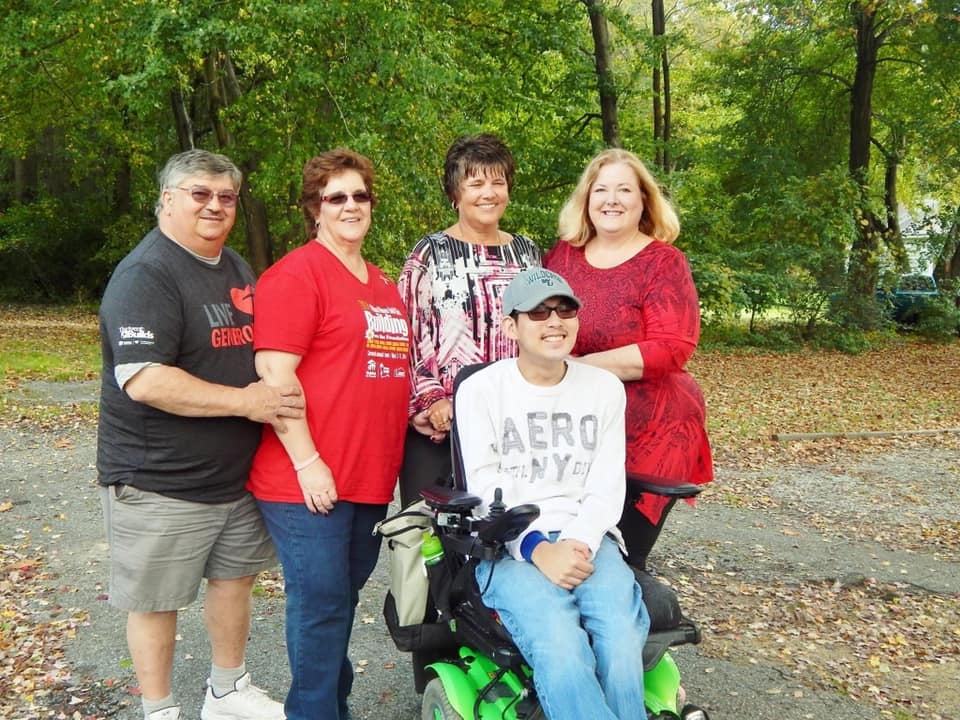
Habitat’s Ramp program exists and thrives due to Patty and Debbie encouraging me to step up to fill a HUGE GAP in our County’s budget. Your generous donations to our ramp program means that we now have 30 metal ramps out serving those who can’t afford one. Be a Patty – live generously. PS Pat is on our building committee and Tyler is one of our volunteers!!!!

This program exists and flourishes because of people like the group in the picture above. The local, state and federal budgets do not include money for ramp programs that will improve the lives of individuals that need a ramp to live a full life. It would be great if government funding could become a reality, but it seems like the real answer is to encourage communities all over the country to step up and help raise money to build ramps.

If you know someone that is in need of a ramp, try to search all of the local resources available including Habitat for Humanity, but if the problem is money, consider becoming a volunteer and help someone improve their life by helping to raise money and / or help with the construction or installation of a ramp.